Start With What You’ve Got
Living in a smaller space doesn’t mean your pet has to miss out on daily activity. With a few creative adjustments, your home can become a surprisingly stimulating environment.
Build Up: Use Vertical Space
Make the most of your apartment or small home by encouraging your pet to move upwards as well as across the floor.
Install cat trees, wall mounted steps, or floating shelves to give cats or adventurous small dogs a chance to climb.
Create safe perch areas near windows to offer a stimulating view perfect for passive enrichment.
Rotate climbing access points to keep the experience novel and engaging.
Reclaim Unused Corners and Hallways
Even the smallest homes have hidden opportunities. Slight rearrangements can reveal more than enough room for play and movement.
Use hallways as fetch lanes or paths for basic agility games.
Turn low traffic corners into boutique play zones using cushions, mats, or hideaway toys.
Anchor scratchers or interactive toys in otherwise empty areas to prompt spontaneous activity.
Rethink Furniture Layout
Your current setup may be limiting your pet’s ability to move freely even in a small area.
Shift or consolidate bulky furniture to open up central floor space for play.
Designate a consistent play zone clear of obstacles for your pet to associate with movement and fun.
Use multifunctional furniture like ottomans with storage to reduce clutter and free up more space for your pet to roam.
With a few thoughtful changes, your limited space can become an active, enriching environment that keeps your pet both physically and mentally stimulated.
Daily Movement Without a Backyard
Small space? No problem. You don’t need a yard to keep your pet moving you just need to get creative. Start by building basic obstacle courses using what you already have: pillows become hurdles, cardboard boxes turn into tunnels, and dining chairs make excellent weavers. Keep it simple, keep it safe, and most of all keep it fun.
Next, bring out the tug ropes, tennis balls, and puzzle toys. Even a narrow hallway can double as an indoor fetch zone. Short tosses or a few rounds of tug are more impactful than you’d think, especially when done in short bursts multiple times a day. Puzzles? They burn mental and physical energy, perfect for tight quarters.
Mix things up by switching up walking routines inside your building. If you have stairs, use them. Even a few flights up and down can be great cardio. No stairs? Try pacing your unit or adding short walks multiple times a day rather than one long one. Movement’s movement and for your pet, it all counts.
Strategic Play Sessions
You don’t need a big backyard to keep your pet moving you just need to be smart with time and effort. Quick, focused play sessions are usually more effective than hours of aimless activity. Ten to fifteen minutes of concentrated movement a few times a day can do more than one long, distracted session. Think short sprints of fetch down a hallway, a quick game of tug, or structured chase with a wand toy.
Sticking to a daily schedule helps your pet know when it’s time to get active. Same time each day? Even better. Pets thrive on routine. Build movement into morning coffee, lunch breaks, or TV time whatever naturally fits your day.
Another simple trick: rotate toys. Don’t dump the whole basket out at once. Keep a few in rotation and swap them out every couple days. A toy they haven’t seen in a week feels brand new. That keeps interest high without constantly buying more stuff.
Training + Activity = Smarter Exercise

Keeping your pet active isn’t just about wearing them out it’s about tuning them in. When you combine physical play with basic training, your pet gets more out of every minute. Think short commands like “sit,” “jump,” or “turn” layered into a game of fetch or a quick indoor agility track. It’s fast, easy, and way more interesting for your pet than just another round of tug.
This kind of mental plus physical combo keeps them sharp and reduces boredom. It also strengthens your bond your pet’s paying attention, and you’re right there with them. Even a five minute session can challenge their brain while giving them a workout.
Want to get even more out of it? Use training through play to double up on value, especially in tighter spaces. It’s about working smarter, not longer and your pet will love it.
Tools That Help
Living small doesn’t mean your pet’s play has to suffer. There’s a growing market of interactive toys designed specifically for compact spaces and they do a lot of heavy lifting when it comes to keeping pets mentally and physically active.
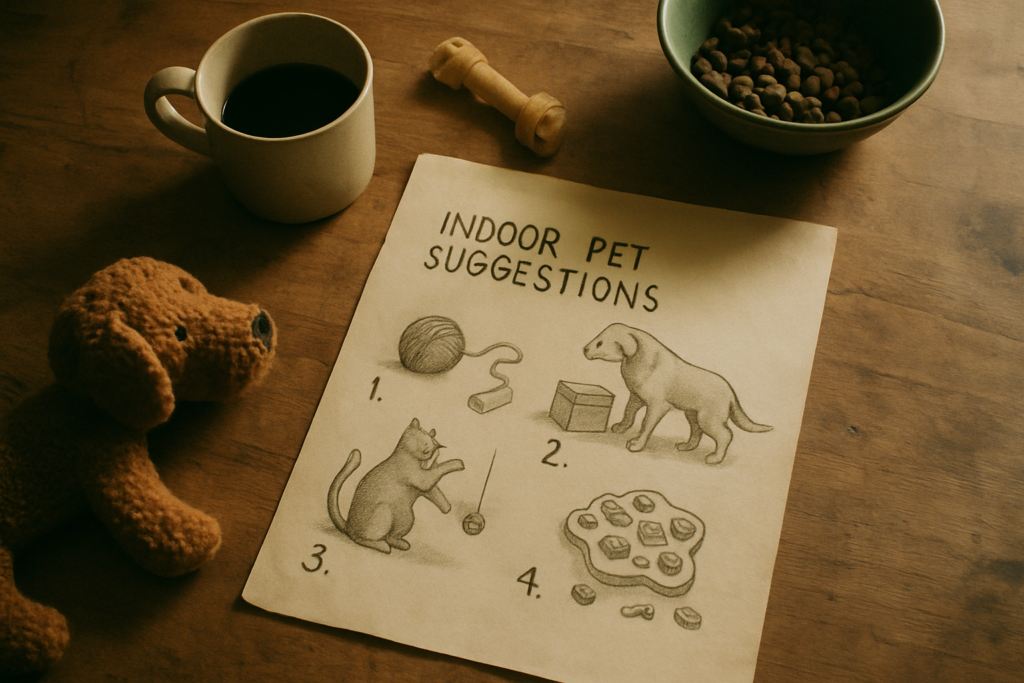
Start with the smart stuff. Interactive toys that move, chirp, or challenge your pet to problem solve can burn off more energy in ten minutes than a casual stroll. Puzzle feeders and treat dispensing balls are dual purpose: they slow down mealtime and add a game like challenge that keeps pets sharp and satisfied. Perfect for floor time in studio apartments or narrow hallways.
Passive stimulation matters too. Pet safe mirrors give curious animals something to explore, while clear wall mounted window beds turn a regular window into a prime entertainment zone. Watching the world go by is surprisingly engaging for cats and some dogs, too.
Bottom line: the right tools let you do more with less space. You don’t need a yard when you’ve got the right gear and a little creativity.
When You’ve Got a Busy Day
Some days, you just don’t have time to play tug or set up a mini obstacle course. That doesn’t mean your pet has to be bored.
Start with low effort enrichment. A frozen lick mat, a snuffle mat, or a filled kong toy can buy you 20 to 30 quiet minutes while still engaging your pet’s brain and senses. These tools don’t just distract they give pets a task, which helps burn mental energy.
Surprisingly effective? Pet friendly TV or video playlists. There are YouTube channels and streaming platforms with content designed for pets. Think birds flitting across the screen or fish swimming by. It’s not a miracle solution, but it’s something, and that matters when you’re slammed.
If your pet’s more into smell than screen time, create a basic sensory box. Toss in a towel with your scent, a crinkly paper, a pine cone, and a dab of lavender or vanilla on a toy (check it’s pet safe first). Variety in texture and smell can stimulate their curiosity even in a tiny room.
When time’s tight, the goal isn’t to wear them out. It’s to keep them engaged enough to avoid anxiety or destructive boredom. A little goes a long way.
Don’t Forget Mental Energy
When space is tight, brain games step up. You don’t need a yard to work your pet’s mind just a little creativity and a few minutes a day. Simple training games like practicing sit, stay, or turn in rapid bursts can go a long way, especially when built into fun sessions. Try weaving commands into quick routines or play focused drills just a few reps can mentally tire them out.
Hide and seek works surprisingly well too. Stash treats behind doors, under blankets, or inside rolled up towels. With toys, switch it up: sometimes make it easy, sometimes make them work for it. Let them sniff, search, and solve it taps into natural instincts that keep them sharp without needing to run laps.
For more ways to blend activity and obedience into something fun and functional, check out training through play. It’s a no fuss, high reward move that’s ideal for small spaces and busy schedules.
Wrap It Into Your Routine
Keeping your pet active doesn’t always mean carving out extra time. Fold movement into the things you’re already doing. Sweeping the floor? Let your dog chase the broom for a lap or two. Doing laundry? Toss a sock across the hall between loads and make it a mini fetch session. Even brief moments like these add up.
Consider pairing exercise with fixed parts of your day right before meals, during coffee prep, or as part of the evening wind down. A quick five minute play before breakfast signals structure (and tires them out a bit). A calm walk around the apartment post dinner helps both of you reset.
And here’s what really works: showing up every day, even if it’s only for a little. You don’t need to run a daily obstacle course or fill the living room with toys. A short, regular routine builds a habit. Your pet doesn’t need a backyard they need you in motion and in sync.
Routine isn’t just efficient. It’s bonding.